
Blog
Sesame Oil for Hair: Benefits, Before & After, and How to Use It

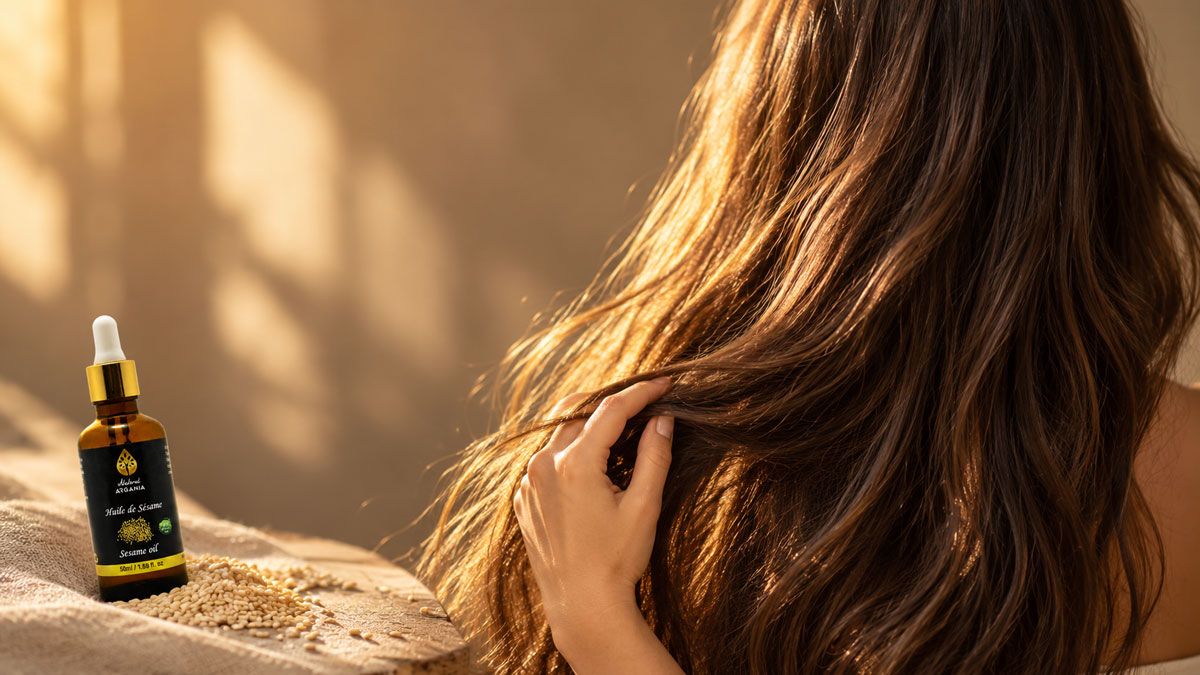
Sesame oil is frequently used in natural hair-care routines, often promoted for “growing hair” or “darkening” it. At Naturel Argania, we prefer to give you the facts rather than repeat claims that no cosmetic oil can legally guarantee. Here’s what sesame oil really does for your hair, how to use it properly, and what you can realistically expect in terms of before-and-after results.
What Science Says — and Doesn’t Say — About Sesame Oil and Hair
It’s important to be clear from the outset: no cosmetic oil, including sesame oil, can legally claim that it “makes hair grow” or “darkens hair” in Canada without specific authorization from Health Canada. If you see such claims elsewhere, be cautious — they go beyond what cosmetic regulations permit.
What sesame oil does, however, is nourish the hair fiber from the outside. Cold-pressed from sesame seeds, it is rich in fatty acids (particularly linoleic and oleic acids) and natural antioxidants such as sesamol. Used as a hot oil treatment, it has traditionally been recognized for its ability to:
- Softens and Smooths the Hair Cuticle, helping reduce the appearance of frizz and improve manageability.
- Adds Shine, by forming a light protective film that reflects light more effectively.
- Nourishes Dry or Damaged Lengths, partially penetrating the hair shaft thanks to its lighter texture compared with other vegetable oils.
- Supports Scalp Comfort, traditionally used in massage to soothe feelings of discomfort or dryness.
In other words, it improves the appearance and texture of existing hair without affecting its biological growth or pigmentation.
Sesame Oil and Color-Treated Hair: What You Need to Know
Sesame oil is not formulated or tested to alter the color of your hair, whether color-treated or not. Nor does it “protect” hair color in a clinical sense. What it can do, like any pure hair oil, is help reduce post-coloring dryness by nourishing the hair fiber — which can indirectly give color-treated hair a healthier, shinier appearance when dryness tends to make it look dull. If you have recently colored or fragile hair, always perform a strand test before full application.
Before & After: What to Honestly Expect
This is the most frequently searched question, and it’s where much of the content online tends to exaggerate. Here’s what a realistic before-and-after typically shows after several regular hair oil treatments (4 to 6 weeks, 1 to 2 times per week):
What You Can Reasonably Expect to Observe:
- Lengths That Look Visibly Less Dry and Feel Softer to the Touch.
- Increased Shine, Especially on Dull or Porous Hair.
- Less Frizz and Fewer Flyaways in Humid Conditions.
- Fewer visibly split ends (the oil cannot repair already split hair fibers, but it can help limit breakage caused by dryness).
What You Should Not Expect:
- Accelerated Hair Growth or Increased Hair Density.
- No Change in the Natural Color of the Hair.
- A “Miracle” Repair of Severely Damaged Hair in a Single Application.
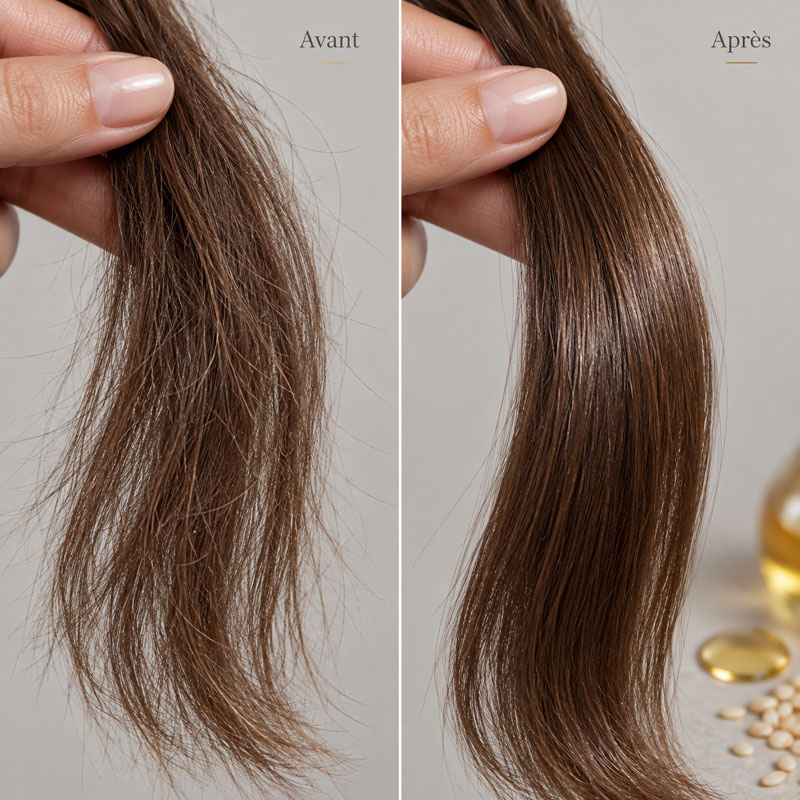
An Honest Before & After with Sesame Oil Shows Transformed Hair Texture — Not Transformed Biology.
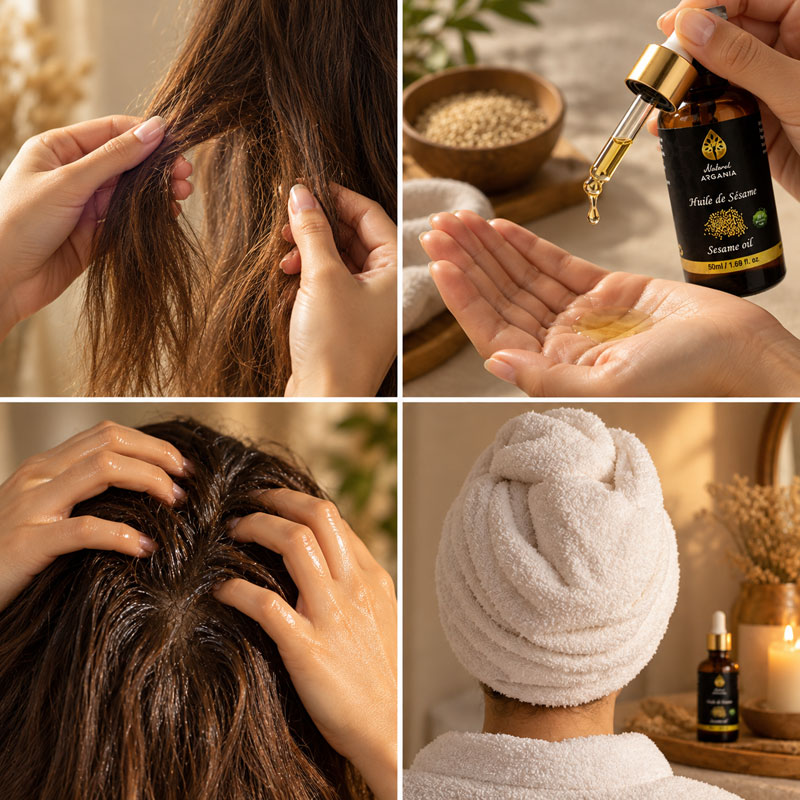
How to Use Sesame Oil on Hair (Hot Oil Treatment)
The pre-shampoo oil treatment remains the most effective way to enjoy the benefits of sesame oil. Here’s how to do it:
- Section Your Dry Hair for even application, from roots to ends.
- Warm the Oil Slightly between your hands or in a double boiler — the warmth helps distribute it more evenly and enhances the application experience.
- Massage the Scalp and Apply to the Lengths, focusing on the ends if they are dry.
- Leave It On for at Least 30 Minutes, or overnight under a towel or shower cap for a more intensive treatment
- Shampoo Once or Twice to thoroughly remove the oil, especially if you have left it on for several hours.
Recommended Frequency: 1 to 2 times a week for regular maintenance, depending on the dryness of your hair.
Sesame Oil vs. Argan Oil: Which One Should You Choose?
Une question fréquente : faut-il choisir l'une ou l'autre ? En réalité, elles se complètent plutôt qu'elles ne se remplacent :
- L'huile de sésame est particulièrement recherchée en bain d'huile capillaire pour sa texture et son action nourrissante sur la fibre.
- Argan Oil est plus polyvalente — cheveux, visage, corps et ongles — et convient bien en soin sans rinçage sur pointes ou en finition après le bain d'huile.
Beaucoup de nos clients alternent les deux selon les besoins de leur cheveu.
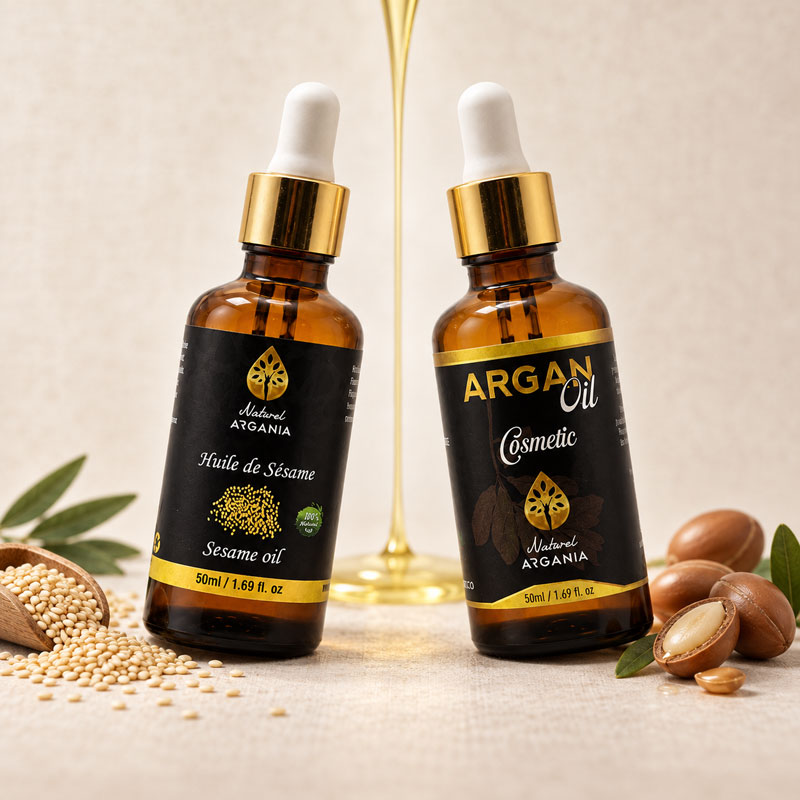
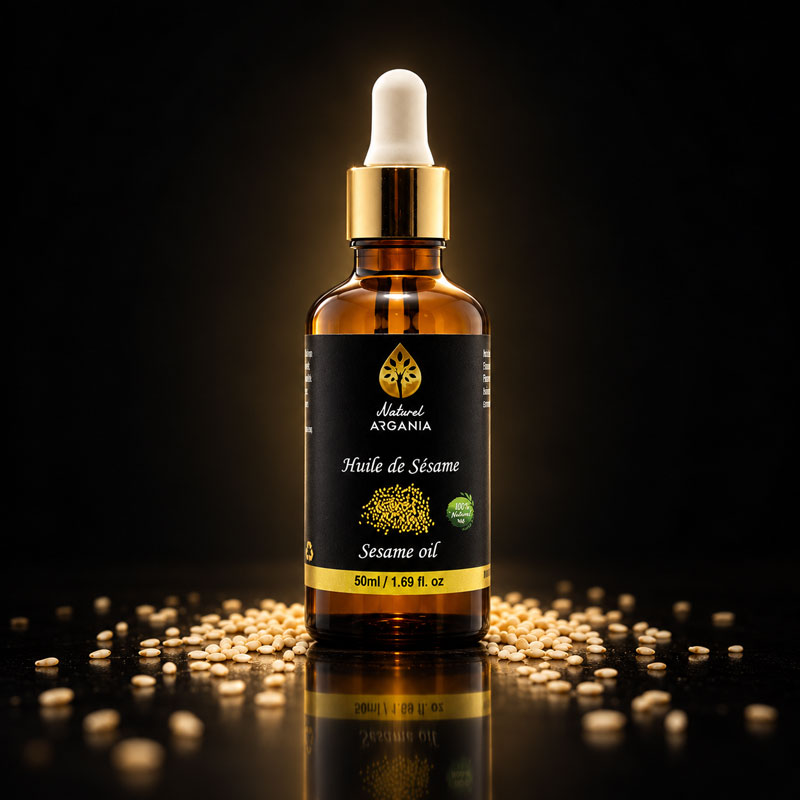
Notre Huile de Sésame Naturel Argania
Non raffinée, extraite à froid, sans additifs — une huile pure au service de vos cheveux, ongles et peau. Livrée partout au Canada et aux États-Unis, ou disponible directement en magasin à Québec.
Questions fréquentes sur l'huile de sésame et les cheveux
Non. L'huile de sésame n'est ni conçue ni testée pour modifier la couleur naturelle des cheveux.
Oui, avec précaution : faites un test sur une petite mèche si votre coloration est récente ou fragile, comme pour toute huile capillaire.
Les premiers effets sur la texture (souplesse, brillance) sont souvent visibles dès la première application. Pour un effet plus durable sur des cheveux secs ou abîmés, comptez 4 à 6 semaines d'utilisation régulière.
Oui, c'est même recommandé pour un soin plus intensif — appliquez, couvrez d'un bonnet ou d'une serviette, puis lavez le lendemain matin.
